Most tech start-ups have a life cycle that reaches a point where the original investors and founder want to realise the value of the company by selling it to a larger concern. This is often a good thing because the skills needed to start a business are often not appropriate for a medium or large company. There are obvious exceptions!
But do you sell the company or sell the business? And what is the difference?
In the past, election forecasts have been made on a country-wide basis. A sample of people is carefully selected to represent the population as a whole and they are asked who they will vote for. The percentages for each party are normally pretty good, but how do you convert that to seats in parliament? Just because a party gets x% of the vote doesn’t mean that get the same percentage of seats – a fact well known to the smaller parties. In the past there have been rules of thumb, but these are very crude.
Now there are forecasts by constituency based on a technique called MPR. This stands for “multi-level regression and post-stratification (MRP)”. How does this work?
I have been using JavaScript (Node) for the last few years, but I have pretty much come to the end of my hobby project. I see that Python is very popular for server side systems., so I thought would take a look.
I remember talking to a comms consultant in the 1980’s about packet switched networks like the Internet, which was new-ish technology at the time. He had this dreamy look in his eye. “one day there will be packet-switched voice”.
Well he was right – we have it and it is called VOIP (Voice Over IP (Internet Protocol)). All the telephone providers in the UK are switching over to this now, which means your telephone has to plug into your router, wherever that is. In my case this is not in the hallway, where a telephone belongs, but next to the television on account of my broadband provider being a cable company.
I was looking at the page telling you about Moving to Python from other languages and it referenced “comp.lang.python” without any explanation of what it was. That took me back. It is referring to a Usenet News Group. They were the first social media dating back to the 1980s. This was before Facebook, before Reddit, before online forums, before the World Wide Web. I thought they were long gone. But no – they are still alive and well.
The last Apple product I had was an Apple II back in the last century. So I don’t have a login to Apple (an Apple ID). But when I bought a PC from Currys, it came with 3 free months of Apple TV. I always wanted to see Slow Horses, so figured I would take them up on this. But I had to get an Apple ID first.
For some reason I can’t understand, Python is the second most popular language out there1 At first glance the language doesn’t look promising. One complaint about COBOL was that you could screw up a program by an unwanted period. With Python it just takes a space. But I shouldn’t condemn the language because of a brief glance at the Python website. So I thought I would give it a shot. More recently I have been experimenting with Node, so that is my baseline
If you are asked to name the most important pioneer in database development, the name Edgar Codd is probably the first name that comes to mind. He pioneered the concept of relational database. But another person deserves credit as well. Nearly a decade earlier Charles Bachman did fundamental work, developing the first database management system.
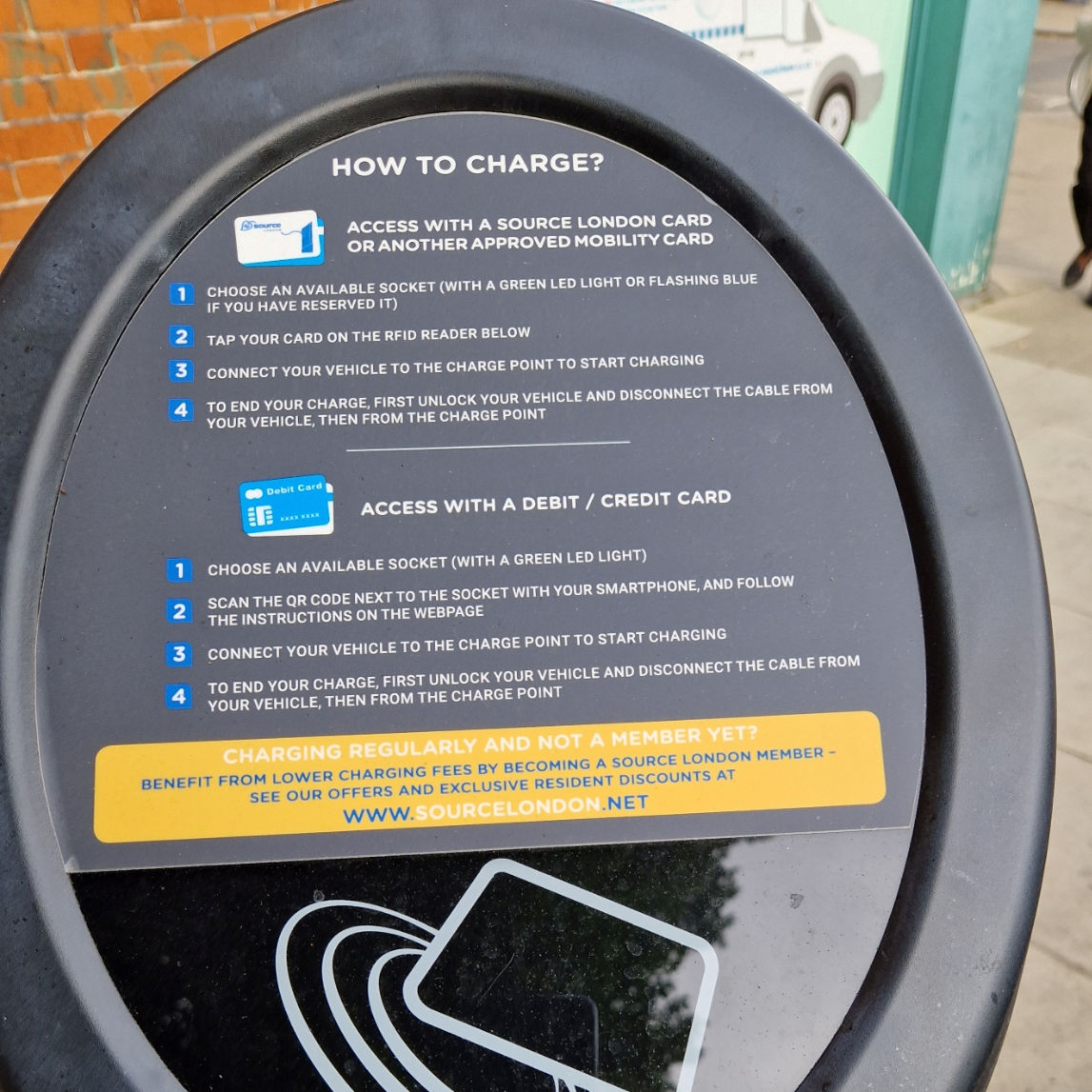
There is an EV charging station just opened near our house in Ealing. I am bemused by the way they are going about doing this. I mean I can buy a railway ticket, or pay for petrol for my car just by tapping a machine with my credit card. But to pay for a charge to your EV you have to go through a grotesque procedure that involved giving the supplier a lot of personal information for no obvious reason. Click on the thumbnail on the right to see the full set of instructions.
You are in a pub and you hear someone say “that is Betamax vs VHS all over again”. What is that about? It is an interesting story which might effect your next career move, so listen up.



 Bob Browning's blog